















































SoldOnAruba.com · Practical guides
Comparing agency proposals without relying on headline promises
Published 5 November 2026

Put proposals into a common comparison format. Separate the work, the fees, the assumptions and the unanswered questions before you decide which conversation to continue.
Give each professional the same brief
Send the same description of your needs to each person you are comparing. Include the kind of help you want, your communication preferences and any practical timing constraints. If the assignment changes during a conversation, update your comparison notes so you are not judging an old proposal against a new one.
Keep a dated copy of every reply. A verbal comment and a written term may not say the same thing. If something matters to your decision, ask the professional to put it clearly into the proposed scope. This is an organizational step, not a substitute for advice on an agreement.
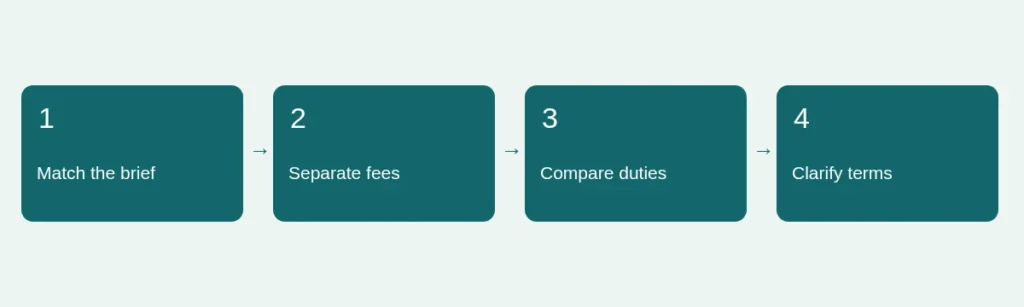
Build four comparison columns
Use four headings: included work, excluded work, proposed charges and conditions. Under included work, describe actual activities rather than broad adjectives. Under exclusions, note tasks that would need a different professional. Under charges, record the currency, calculation method and when payment is proposed.
Do not convert estimates into fixed amounts in your notes. Ask what could change the figure and whether another provider’s charges are separate. If one proposal is less detailed, mark the missing information as a question. A blank cell is not evidence that something is included or free.
Compare communication and boundaries
Ask who your point of contact would be, how frequently updates are proposed and what happens if that person is unavailable. Include your own responsibilities, such as providing documents or confirming decisions. A proposal should be compared as a working relationship, not only a list of services.
Ask how the professional would handle a change in scope, referral relationships or a situation involving another party they know. Record the explanation without assuming that all proposals use the same arrangements. For identity checking, use a separate source record; a polished proposal is not proof of the author’s affiliation.
Resolve terms before making a selection
List the questions that could change your decision: duration, exclusivity if proposed, cancellation provisions, authority to act and the treatment of expenses. Ask the professional to explain the proposed terms, and seek independent advice where interpretation is important. Do not infer legal effects from a comparison table.
Finish with a short rationale: which proposal matches the brief, which assumptions remain and what must happen next. Avoid ranking professionals by unsupported promises of price, speed or investment performance. The useful result of comparison is a clearer scope and a documented next step.
Use this guide with the directory
Browse the agency and professional directory, then use our representation checklist to compare the service offered. This site lists professionals, not properties. Directory inclusion is not a promise of credentials, transaction results or suitability.
Source checked 5 November 2026: Aruba Chamber: official business identity resources. The practical comparison questions in this guide are editorial suggestions, not a description of a mandatory process or individual legal advice.